The Good Schools Guide is an impartial and highly respected source for parents seeking guidance on finding the right school for their child. Only schools selected by the Guide’s editors are featured, meaning no school can pay for inclusion. Reviews and recommendations are based solely on merit. For this reason, the Good Schools Guide has earned its reputation as one of the most trusted authorities on British and international education.
Rugby School is proud to be included in the Good Schools Guide and to have received such a thoughtful and positive review. You can read the full, unedited write up below.
Head Master
Since 2020, Gareth Parker-Jones. Previously deputy head academic. Educated at Queen Elizabeth’s Hospital School in Bristol where he was a keen cricketer, boarder and head boy (flawless headmaster pedigree). History at Pembroke College, Oxford; then, having discovered teaching as a gappie in Australia, positions at Harrow, University College School and Sevenoaks.
Despite his impressive CV, it feels like Mr P-J has been at Rugby forever: an amiable, chatty head (we love a chatty head), charming without being smooth, so comfortable in his study that he didn’t even flinch as we balanced our macchiato perilously on the thick cream carpet. He’d have enjoyed it as a pupil here, he thinks. Big goal – ‘to become the boarding school of choice’ – requires the school to ‘be dynamic, to get better,’ with teaching and character education central to everything. ‘We’re in a position to be a market leader,’ he says, ambitious but not unrealistic given the school’s existing reputation for excellence and the dwindling of full boarding elsewhere.
==
The word is spreading, with national and global expansion underway, ‘a hub and spoke model’; a fourth prep’s just joined the burgeoning UK group. Wide geographical spread - with the exception of nearby Bilton Grange – creates a natural ‘boarding pathway’ to Rugby. Global schools - Thailand, Japan and Nigeria with Hanoi and Dubai imminent - in part support funding for domestic bursaries.
Back at HQ, Mr P-J is ‘a superb educationalist,’ says one parent; ‘Much more head than CEO,’ another observes. Greets students by name on their way into chapel; lunches in a different house every day; teaches the whole of F block. No wonder life is ‘busy, very busy’. In scraps of down-time, he reads history (currently ‘almost at the end’ of Andrew Ross Sorkin’s ‘1929’) and that morning had been for a run in anticipation of the school’s cross-country, the Crick, that weekend: ‘It’s personally soul destroying, my way of annually charting my decline,’ he laughs ruefully, ‘everything hurts!’ Wife is head of theology and philosophy and their son and daughter are current students.
"‘Much more head than CEO.' Greets students by name on their way into chapel; lunches in a different house every day; teaches the whole of F block."
Entrance and admissions
Day or full boarding – nothing in between (‘It’s all in, or all out – ideal!’ said one mum). Year 6 assessed in English and maths in a bid for a conditional offer. Around two applicants per place from 300 schools near and far; those already boarding at Rugby School Group schools have ‘fewer hoops to jump’ and discounts on boarding fees, but nonetheless everyone must meet the standards.
For year 12 entry, four or five applicants per place. Entrance tests and interviews in proposed A level or IB HL subjects.
Scholarships available: academic, sport, performing arts, music, art, DT and computer science. Scholars win access to the possibility of a means-tested bursary, but there’s no automatic fee remission.
Exit
Handful of year 11s don’t make the grades for sixth form. From year 13, 70 per cent to Russell Group including perennial favourites Durham, Newcastle, Exeter, Bristol, Edinburgh. In 2025, 11 to Oxbridge, four medics and 18 overseas including 12 to north America (scholarships to Princeton, Cornell and Vanderbilt) and one to the Netherlands. Often a couple to music conservatoires.
Latest results
Teaching and learning
It’s nice to find a school putting real welly into year 9, so often seen as a warm-up elsewhere: there’s ‘a strong case’, academic deputy says, for investing in those students. In the face of AI, school is ‘making the most of the humans in the room,’ putting ‘hard thinking’, rigorous questioning and student-led discussion at the heart of every lesson. Carefully curated texts are set for prep so that teachers can get straight to the crunchy bits, developing oracy skills and ‘growing their pupils’ brains’. This ‘flipped classroom’ technique is well-established, of course, but we found Rugby’s adoption of it refreshingly genuine. ‘The idea is to encourage better thinking in a world of bitesize text.’ ‘I feel that she’s pushed harder than she would be at our local schools,’ said one parent, characteristic of many.
Results are towards the upper end of the co-ed boarding pack, particularly in sixth form. At GCSE, biology, computing, English, geography, Latin and ancient Greek banked high proportions of 9s last year. Astronomy (cool!), classical civilisations, PE, computing and drama ensure that all interests are covered. One parent wished the options were a little less trad – ‘Can’t they learn to cook a lasagne instead?’ – but conceded there’s plenty of opportunities to polish culinary skills off timetable. Pupils choose from French, German, Italian and Spanish, though native language GCSEs can be facilitated on a one-off basis.
We saw lots of hard thinking in action. English IB-ers were prepping orals on Orwell’s Moroccan essays, ‘Linked to global issues, naturally, since it’s IB.’ Just five in the group, some on laptops and others brandishing highlighters, the session felt collaborative and grown-up. Off the Old Quad, further mathematicians explained the strings of algebra they’d written on the white-boarded walls, patiently talking us through some binomials. ‘I wasn’t sure about further maths,’ one aspiring economist told us, ‘but I’m so pleased that I took it.’
"In the face of AI, school is ‘making the most of the humans in the room,’ putting ‘hard thinking’, rigorous questioning and student-led discussion at the heart of every lesson."
Sixth Form
Around 60 newbies join year 12, settling quickly into house communities. Rugby is no different from other schools in having a smaller IB cohort than A level, though lots of new joiners are drawn by this option.
Three A levels for most, plus EPQ or further maths. Maths huge, with economics, physics and chemistry also popular. Humanities smaller, though English, politics and history all healthy. Modern and ancient languages dwindling, per the national trend. One student told us they’d have started with four A levels if that had been an option. At IB, English is the biggest higher level with biology, politics and economics also strong. Results very spread out, but lots of 6s and the odd 7 in most subjects. Some students pushed one way or the other by subject choices: fine art, photography and textiles available as discrete A levels; IB rolls them together. Theatre studies available at A level but not IB; psychology IB but not A level.
Academic enrichment abounds. We found students using their free periods to dissect fruit flies’ brains as part of collaboration with Stanford. ‘It’s opened my eyes to research,’ said one; ‘I can dissect a fly’s brain in 1 minute 12 seconds,’ the other proudly told us. A mind-blowing opportunity (literally, if you’re a fruit fly) which allows Rugbeians to feed into real, meaningful biochemistry.
Proactive futures department has three full-time members of staff; one-to-one meetings and coordinated support for Oxbridge, medical schools, elite sports, apprenticeships, portfolios, international applications etc. When we visited they were busy preparing for 66 outside speakers to join 25 different career panels that weekend. Also plugs essay competitions, Olympiads etc and identifies gaps in super-curricular provision – for instance, law society about to be revived.
"Academic enrichment abounds. We found students using their free periods to dissect fruit flies’ brains as part of collaboration with Stanford. ‘It’s opened my eyes to research,’ said one."
Learning Support and SEN
It’s about ‘better support, rather than extra support,’ in learning development; 23 per cent of students on SEND register. Five staff members. Students can access five periods a fortnight, with some middle schoolers joining small group sessions in the place of a GCSE; sixth formers come during their study periods. ‘They’ve really picked him up, he’s just not been allowed to flounder,’ said one happy parent.
Although 18 per cent are EAL, Students need to have at least C1 English they largely hit the ground running with their English. A middle school EAL set and private sessions in the sixth form allow for any gaps to be plugged.
Arts and Extracurricular
New director of music thrilled by the opportunities that thriving department has to offer. With 80 events a year, from informal coffee concerts (hot chocolate and cookies also available) to full concertos, open mic nights to singing in St Andrew’s Church whilst locals pop in for lunch, you’d be hard pushed not to find your groove. 11 rock bands, ten ensembles, three a cappella groups. Orchestra collaborates with Royal Birmingham Conservatoire; ‘side by side’ performances expose young musicians to the idea of a career in music. Scottish contingent brings healthy bagpiping scene. Choristers from Bilton Grange support chapel choir; evensong, sometimes broadcast on Radio 3, recently featured in documentary about choral life. ‘The standard is extraordinary,’ says a mum whose child is ‘thriving’ as a music scholar.
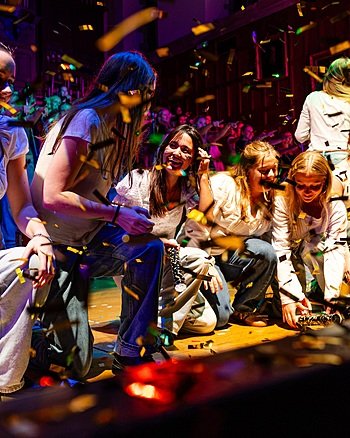
The Macready doubles as the town’s only professional theatre; imminent refurb will include West-end level rigging. Festival on the Close puts Rugby’s drama firmly on the radar; 200 workshops, including collaboration with Stomp, open to local schoolchildren too. Thesps tour to Coventry, Bloomsbury and Edinburgh. Dance currently only an extracurricular option but performing arts scholars are all involved, working with ensemble in residence, Motionhouse; agents invited to annual showcase. ‘Ballet and hip hop is a massive boom area,’ school says, and indeed the dress rehearsal that we watched of Mozart’s Requiem, in partnership with Kings International Ballet, was strikingly beautiful.
Daily notices, read out after lunch in house (we were in Bradley), give a snapshot of school life: good luck to all dancers and musicians in Mozart’s Requiem; if anyone’s being sporty this afternoon, good luck with that too; more student marshals are needed to oversee this weekend’s Crick run, please; come to Fem Soc if you can. ‘Yesterday I went on a trip to Wales and walked up a mountain,’ one year 9 told us; our year 12 guides had to whizz off to organise their upcoming gold D of E expedition. Lots of encouragement to pursue whims and follow passions: we met a sports scholar who’s taken up the piano; a synchronised swimmer who trains offsite twice a week; and the head of CalSoc, keen to organise some Scottish reeling lessons and a joint social with Oundle.
Trips in the holidays travel the world. Sportsmen and women to the usual sunny and snowy climes, art historians to New York and Rome, writers to creative retreats, linguists to France, Spain, Italy and Austria and, of course, exchanges to Rugby's international outposts in Japan and Thailand.
"At a time when music is unfortunately being sidelined in many schools, Rugby is bucking the trend."
Sport
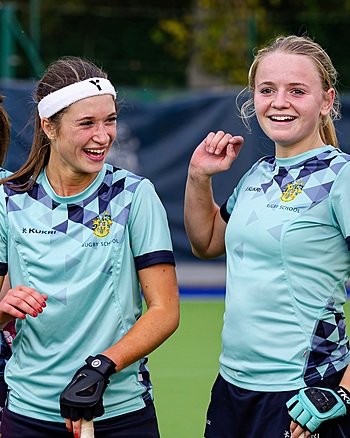
The hallowed turf where William Webb Ellis created rugby football (‘A day boy!’ head points out), is on The Close, the spiritual and geographical heart of the school, a gorgeously quintessential spot for the first XV. Nowadays, cricket also massive - everyone decamped to Lord's last summer to watch boys and girls winning the nationals, and alumnus Jacob Bethell is a school hero. Cross-country running ‘a big thing,’ and current pupils represent England and Scotland in hockey; girls won National Plate last year, whilst netballers had county and international success.
Core sports in year 9 and 10 are hockey, rugby, netball, tennis and cricket. After that the menu broadens, with other racket sports, football, golf, sailing, polo, clay pigeon shooting, badminton, fencing, swimming etc. ‘He’s found his niche in tennis, and now he’s flying,’ said one mum. No rowing.
Whether involved directly or not, cheering on your mates in the myriad house competitions is a big thing and our guides were itching to get to the house football match they were missing. Rivalry can be taken as seriously as anyone wants it to be – ‘We actually go for ‘best dressed’ at those competitions,’ one pupil admitted – and much playful banter surrounds the various house cups. Some houses are definitely sportier than others, parents tell us. Lots have gyms, ‘and our Pelotons have Netflix!’ the Bradley girls gushed.
Aspiring Athletics Performer programme (AAP) structures training plans, mentoring and year-round fitness for those that way inclined; sports scholars enjoy access to rather exclusive-sounding strength and conditioning area. ‘He’s exhausted after all the sport!’ one mum says, ‘he’s got strength and conditioning, then training, then rackets, rugby, hockey, tennis, it never ends!’ For mere mortals, the gym is newly refurbished, Fatboy Slim on the speakers and rolling sports on the telly - ‘Oh, good, they’re showing the golf!’ said our guide, making a mental note to come back later.
"Cricket also massive - everyone decamped to Lords last summer to watch boys and girls winning the nationals, and alumnus Jacob Bethell is a school hero."
Boarders
Thirteen boarding houses each home to around 50 students; the two day houses are bigger. All are single sex. Three-quarters of pupils board. This is full boarding and families hoping for weekends at home should look elsewhere; we visited in the spring, part way through a four-week stint without exeats. Accommodation varies, but all first years share and gradually move into single study bedrooms. We toured Kilbracken, brand new, where every room is now ensuite (cue much tutting and eye-rolling from other students). ‘When you look at houses, you just know,’ a parent explained, ‘like, the first house we saw was just too pink but at Rupert Brooke she knew the vibe was right.’
Breakfast, break, lunch, snack and supper all eaten in house. As breaktime approached, Kilbracken’s catering staff were ready for the onslaught; ‘It’ll be toast, or cheese and ham toasties, or maybe cheese on toast’. Student kitchens well-used and cooking together is sociable: we found squirty cream in the girls’ fridge (‘We like to make hot chocolate’) and, wherever we went, pots and pots of instant noodles, mainly sourced at the local Asda.
House is home: ‘I work in the dining room,’ one told us, ‘it’s basically our kitchen table.’ Lots of happy hanging out, be it indoor cricket after prep or post-lunch Go Rummy marathons. ‘I’ll have 20 of them piled into my office watching Real Madrid,’ says a housemaster. Each house has its own garden; Kilbracken were planning to plant tomatoes. Saturday night socials are often organised by house: ‘We often have drinks swaps,’ girls told us, ‘but last weekend we had a movie night because some of us had finished our mocks.’
Ethos and heritage
Usually, school origin stories are a quirky aside. Here, though, the history is more palpable. Founded in 1567 by Lawrence Sheriff, born in Rugby and by then a bigwig grocer who counted Elizabeth I amongst his customers, perking her up with sugar, ginger and nutmeg. Sheriff bought up eight acres of farmland on the edge of London and left it to the school in his will; this unpromising patch became Bloomsbury (think Georgian squares and Lamb’s Conduit Street, packed with chic restaurants and indie shops) and continues to generate a huge rental income for the school.
As nineteenth century Bloomsbury boomed, Rugby School was also going great guns; it’s this heritage that you’ll feel most strongly. In 1823, William Webb Ellis picked up a ball and ran with it, ensuring Rugby’s position as titan of British sporting folklore. We love the image of Dowager Queen Adelaide visiting in 1839 to watch a match that involved 300 players, muddy boys wearing tasselled caps as a mark of respect for their royal visitor. The gesture gave us the ‘caps’ still awarded for international sports appearances; first team Rugbeains still get them today.
Victorian Rugby also gave us three significant Thomases: Arnold, Rugby’s greatest head master according to school’s own website (Mr P-J’s v self-effacing), brought ‘religious and moral principle’ and ‘gentlemanly conduct’ to the school in the 1830s; an era which Thomas Hughes, one of his pupils, immortalised in his novel, ‘Tom Brown’s School Days’, whose hero says his nightly prayers and plays a lot of cricket. For school history nerds like us, these names are very evocative: squint and you can almost see them filing across The Close to Chapel.
What would Thomas Arnold recognise today, we wondered: ‘He would recognise the development of character, connected to Aristotle and virtue and goodness – they are timeless values,’ says head. We think he’d also recognise the quiet respect for tradition: senior staff are gowned for formal occasions; each house has a ‘drawing room’ where guests are taken for an apple juice before lunch, or where Oxbridge success is celebrated with a glass of fizz; visit admissions, and you’ll sit in rooms with grand fireplaces, sash windows and thick carpets. Though understated, Rugby is solidly rooted in its very British history.
Character education – now encapsulated by ‘Whole person, whole point’ ethos - referenced by head, parents, students and dozens of posters around the school. House communities are central to it. Our lunch companions in Bradley, unfazed by hosting a guest, were full of beans: ‘We have the best house spirit and we have the most fun!’ Esoteric activities include ‘Choc Soc’ and MFL Bake-off: ‘It’s always a disaster, baking German cookies with German instructions.’ Annual Push Cart race around the Close another source of joy: ‘Chanting and music and fancy dress, you get tiny F blocks chanting at the top of their voices next to these huge rugby players, it’s so funny!’ After lunch, we stood for the HM to say grace: ‘For food and friendships, Amen’. Amen indeed.
Uniform is smart but practical. Blue tweed jackets for everyone – light blue for every day and dark blue for Sundays and special occasions. Umbrellas are ‘strongly recommended’. We visited on an exceptionally blustery day, the wind whistling along the high street and across The Close; students’ response to the weather pragmatic, with girls wearing pyjama bottoms under their long, navy blue skirts, ‘otherwise they billow’. We spotted the occasional (not uniform) Ugg boot, too. ‘The children we saw at the open day looked a bit scruffy and that felt more homely to us,’ one mum told us; ‘I liked that one had paint on her skirt,’ said another.
Rugbeians of yesteryear are just who you’d hope for: a pleasing collection of politicians (including Neville Chamberlain), authors (including Lewis Carroll), cricketers, philosophers, bishops, ambassadors and lieutenant generals. More recently, best-selling author and millennial hero Dolly Alderton, Ella Mills of ‘Deliciously Ella’ fame, Will Butler-Adams, the CEO of super-cool Brompton Bicycle Ltd and Jacob Bethell, currently playing cricket for England having been their youngest ever men’s captain.
Pastoral care, inclusivity and discipline
Houses deliver frontline pastoral care around phones, homesickness or friendships; parents we interviewed felt unanimously that it’s excellent. Phone policy, which varies by yeargroup, seems to work (‘I don’t hear from her unless she needs a delivery of chocolate,’ one mum tells us). Live-in matrons - ‘Everyone loves their matrons,’ – just one of the pillars of positive influences in house, which include housemasters and housemistresses, tutors and older students. In-house dining really helps, though food itself varies. ‘It’s never bad,’ concede boys, ‘today’s lasagne was pretty banging,’ and, girls add, ‘There’s always pasta, a jacket potato, salad.’ Collective outrage amongst our guides on discovering Whitelaw’s recent sushi bar (‘What?!’). ‘Feeding them 5 times a day is not enough, it appears’, says HM, and boys corroborate with tales of ‘a steak and a few eggs’ at 9.30pm; parents aren’t keen on the Saturday night Deliveroos (house policies seem to vary) – Kasper’s, local purveyor of puddings, apparently does a roaring trade.
We met wholesome, well-balanced teenagers. Interacting IRL all week, with work and play carefully curated and balanced. All makes the ‘undulating journey’ of adolescence a bit calmer, parents feel, though ‘They’re not cosseted.’ With organised prep six nights a week and no need ‘to crowbar them out of bed,’ parents are grateful to have ‘removed the nag factor’. ‘You can’t have groups of teenagers unsupervised for long periods,’ school says, ‘you need boots on the ground, to punctuate the day.’ With no one emptying out to hit London nightlife at the weekend, there’s less social pressure here than elsewhere. Nonetheless, ‘Teenagers are pre-programmed to test boundaries,’ school says, ‘so we are educating them about what is tolerable or acceptable.’
The pub on Saturday night’s an option to anyone who’s turned 18, provided that they’re home in good shape before curfew, though kids nowadays are more interested in hitting the gym than the boozer, an HM tells us (‘Really?!’ said one mum, bemused by this news, ‘I’m not sure my son’s got the memo!’). Red line on drug use of any sort.
At almost 900, school is the biggest it’s ever been, but still smaller than some competitors. ‘We need to fit in the chapel’, head explains; speaks volumes about the importance of community. Categorically no Rugby ‘type’, though students struck us as unstuffy and genuine, making it a welcoming and inclusive community.
Pupils and parents
Day pupils are necessarily local, usually living in Warwickshire or Northamptonshire. Of the boarders, 20 per cent are from overseas (Kenya, Hong Kong, Germany currently most popular) and the rest from all corners of the UK. Strong family loyalty: of our four guides, three had siblings or cousins at the school. Less flashy and ‘less home counties’ than elsewhere, parents felt; ‘People at Rugby are a bit more pragmatic,’ said one; ‘It’s not a snobby place,’ said another.’
Pupils we met were very good company. Engaging and chatty, just the kind of friends we’d like for our own teenagers. Not too competitive; zero machismo. ‘The campus is big and you’ve got to be a bit mature,’ says one mum, ‘it’s not for the faint-hearted.’ The distance from London (psychological, that is – Euston is actually only an hour away) brings a lack of swagger and we found pupils less self-conscious or sophisticated than their more southerly counterparts.
"With organised prep six nights a week and no need ‘to crowbar them out of bed,’ parents are grateful to have ‘removed the nag factor.’"
Money matters
Generous with bursaries, always means-tested; more than 150 students currently in receipt of support. Those with most to gain from boarding may be awarded transformational – 100 per cent and above - bursaries from Arnold Foundation (currently 30 places though school building towards 40 in perpetuity). All other scholars also get access to bursary funding. Bursary funding available for day pupils even without a scholarship.
The last word
With its glorious heritage, Rugby strikes the right balance between traditional and forward-thinking, serious and playful, world-class and down-to-earth. Indeed, we think ‘orando laborando’ (‘By praying, by working’) is rather a dour motto for a joyful, modern boarding experience. How’s this instead? ‘By praying, by working, by laughing, by singing in the choir, by running the cross country in the sunshine and by making lifelong friendships over dinner in house.’* A fantastic school worth a detour to the Midlands – not to be missed.
*For purists: ‘Orando laborando, ridendo, in choro cantando, cursum campestrem sub sole currendo et amicitias per totam vitam Iungendo per cenam domi.’
"With its glorious heritage, Rugby strikes the right balance between traditional and forward-thinking, serious and playful, world-class and down-to-earth."